
Date: 1999
Pages: 162
Author: Gene Edwards
Why This Book Matters
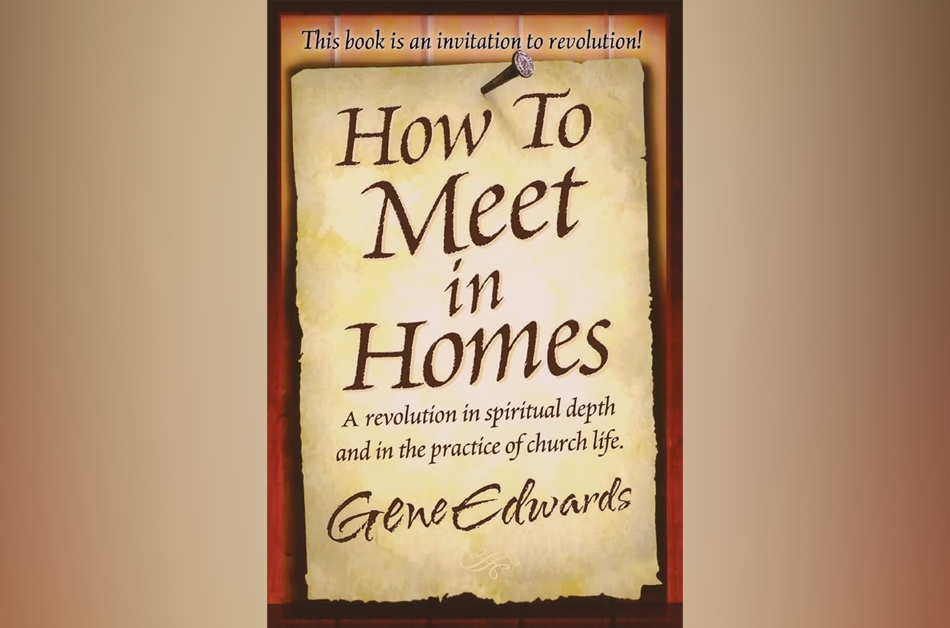
How to Meet in Homes: a Revolution in Spiritual Depth and in the Practice of Church Life by Gene Edwards is a push for a revolution in the way Christians gather. Edwards’ experience as a missionary in Albania, after Albania opened up to the West in 1990, is the experience that opened his eyes to many issues in church. The results of all that mission work were just a few hundred consistent Christians out of 30,000 converts! He credits the abysmal numbers to importing American Christianity into Albania rather than allowing the people to explore and find indigenous expressions of Christianity that resonated in their time and culture.
Edwards’ big point is that not only does the American way of doing church not fit in other countries, it doesn’t even fit in America. Things aren’t going well with that model and what it has produced over the years has been lacking.
This book examines this situation of cultural Christianity in America and explores alternatives in the house church. The book doesn’t hold back on being negative, even possibly sarcastic at times toward the American church model. Here it is in Edwards’ words,
“This book proposes something radical to the extreme. It introduces a totally new way to meet. This is not about reform or adaptation. This is about absolutes; this is about abolishment. It means throwing out the way we meet, in its entirety. Beginning with a whole new premise and with a totally different vantage point. Beginning in dimensions that conform to nothing American Christianity presently practices. A revolutionary new way to meet.” – p.15
Core Message
The formalized format of American Christianity is not natural to the ways humans operate and is also foreign to the New Testament. There is too much push for position, control and power. The clergy/laity divide creates a passive church that is not as God designed it. The result is lifeless and boring. The ultimate result is people eventually stop going. We are already seeing this in many Western nations in Europe and the U.S. (even moreso now than in 1999).
How to Meet in Homes walks through the Sunday ritual, exposes the roots and offers direct critique. Edwards pulls no punches in his critique. Edwards goes after the model, full speed. He critiques it on the Protestant side and the Catholic side and even the Eastern Orthodox. No one escapes his magnifying glass! Even the Brethren get their due.
His point is that we need to know our history and that the presupposition that the way we do it is ancient is really not the case. Church has been influenced by many other factors that came long after the New Testament was written. He gives a decent treatment of some of these influences that most are largely unaware of.
Edwards also spends a great deal of time looking at what the New Testament has to say about the churches in: Jerusalem, Judea, Antioch, Galatia, Greece and Ephesus through itinerant workers.
What is his solution? Start over. Reforming existing churches won’t get the job done. He believes, and I think he is largely right, that churches need to be started that are off on the right foot day 1. What does that look like? It looks like going back to the New Testament and embracing more of what we see there. Like what? Like Paul starting a church, getting them independent and moving on (which we largely don’t see today). This involves allowing local people to make local decisions that may not look like how we would do it.
He believes the home church environment is much more agreeable to this approach than the traditional church. “If we met in homes, experienced “community”— whatever that is—had an unending variety of ways to gather, and were a lay-led movement . . . you could never sell the present Sunday church service to anyone! We would gag at the thought!” – p.110
The practical “solutions” are saved for the final section of the book – Part 3 “Starting all over totally new from the ground up.” This requires someone to get things started but to not get in the way! It doesn’t start with trying to have a church service or control. It starts with discovery. He suggests committing to a set period of time to meet together as a minimum and starting only with a meal once or twice a week. Let things progress from there.
Key Insights & Takeaways
- Each culture must discover a way of meeting that is aligned with scripture and sensitive to their people
- The current system cannot be reformed. We must start fresh with new home churches
- The church body is participatory and not top down
- There was no “outside interference” dictating what a church did when the people gathered
- Early church gatherings were abundant with love and mutual affection
- A need for more church planters who follow the example of Paul and Barnabas
Strengths & Limitations
Strengths: The book is grounded in scripture and history and is not afraid to call a spade, a spade. It offers principles and practices to help one envision a way forward that is simple and doable. The book is also cross-cultural, opening the door for culturally relevant and informed expressions of ekklessia.
Limitations: Edwards is a bit harsh at times. While I agree that spending all our time reforming traditional churches is not the path forward, I am not so pessimistic as to think it cannot be done in any corner of the Protestant universe.
Home Church Application
Here is a quote that will give you the direction the book takes,
“This book is really not about methods! Despite its title, it is not a how-to book. The purpose of this book is to aid you in having a revelation of the need of the centrality of Christ and a vision of the ekklesia. And after that—hopefully—a radical, total revolution in your life! The “how” is discovered in the crucible of church life. What happens in the gathering is something each culture must discover. It comes from the bottom up. Burned in the crucibles of desperation.” – p.71
How does this impact home churches? It helps us see how to fully embody the church of the New Testament by helping us divest ourselves or deprogram ourselves from our past traditions and institutions.
About the Author
Gene Edwards spent over 70 years in ministry! He worked as a missionary and traditional church minister in the Baptist church. I am not sure based on the info available his history with home churches but after reading this book, I cannot imagine he stayed in a traditional church. He died in 2022.
Related Reading
“The Last Revolution: Back to the New Testament Model of Discipleship” by Torben Sondergaard
“The House Church Book” By Woflgang Simson
Links are affiliate links that come at no extra cost to you.
Discover more from Home Church Resources
Subscribe to get the latest posts sent to your email.